
Build AI-Powered Apps with Ease: Your Ultimate Guide
Picture this: It’s early 2026, and Dr. Anya Sharma, a marine biologist, needs to identify specific species of plankton from thousands of microscopic images – a task that would consume weeks of manual labor.
Instead of hiring a team of data scientists and waiting months for a bespoke machine learning model, Anya, leveraging nascent no-code AI platforms, crafted a rudimentary yet highly effective AI application within days. This application, initially a proof-of-concept, rapidly evolved into a sophisticated analytical tool, dramatically accelerating her research. Her journey exemplifies a seismic shift in technology: the democratization of artificial intelligence, making it possible for domain experts, not just seasoned developers, to build AI-powered apps with ease. This comprehensive guide will illuminate the pathways and methodologies for anyone looking to create intelligent applications simply and efficiently in the current technological landscape.
Demystifying Easy AI App Development in 2026
The landscape of artificial intelligence application development has undergone a profound metamorphosis, especially within the last two years. What was once the exclusive domain of highly specialized machine learning engineers and prodigious data scientists is now increasingly accessible to a broader cohort of innovators. The advent and maturation of sophisticated development platforms have markedly reduced the barriers to entry, making easy AI app development a tangible reality for businesses and individual creators alike. By 2026, the paradigm has decisively shifted towards accelerated development cycles, underpinned by robust frameworks and intuitive interfaces that abstract away much of the underlying complexity inherent in machine learning model training and deployment.
This evolving ecosystem is characterized by several pivotal trends that coalesce to foster a more inclusive development environment. Firstly, the proliferation of pre-trained models, often available via cloud APIs, means developers no longer need to train models from scratch for common tasks like natural language processing, computer vision, or predictive analytics. Secondly, the rapid advancements in low-code and no-code AI app building platforms have empowered citizen developers and domain experts to orchestrate complex AI workflows with minimal or no traditional coding expertise. This synthesis of pre-packaged intelligence and user-friendly interfaces fundamentally transforms how to develop AI applications easily, fostering an era of rapid innovation and broad adoption across various industries.
- Accessibility Redefined: The intricate mathematical underpinnings and arduous coding tasks associated with AI are increasingly being abstracted by powerful development environments, allowing focus to shift towards problem-solving.
- Efficiency Amplified: Leveraging pre-built components and intuitive visual interfaces significantly compresses development timelines, moving from concept to deployment with unprecedented velocity.
- Innovation Unleashed: By democratizing access to AI development, a more diverse array of perspectives and domain-specific knowledge can be harnessed, leading to novel and impactful applications that were previously unimaginable or economically unfeasible.
Prerequisites for Embarking on Your AI App Journey
Conceptual Foundations and Strategic Acumen
Before diving into the practicalities of building an AI-powered application, it is imperative to establish a solid conceptual framework and strategic understanding. While the goal is to create intelligent applications simply, a foundational grasp of AI principles is invaluable. This does not necessitate a Ph.D. in artificial intelligence but rather an informed appreciation for what AI can realistically achieve, its inherent limitations, and the types of problems it is best suited to address. Understanding concepts such as supervised versus unsupervised learning, the basics of neural networks, and the ethical considerations surrounding AI deployment will serve as a robust bedrock for effective development. In 2026, responsible AI development is not merely a philosophical concern but a critical operational imperative for any project aiming for long-term viability and societal acceptance.
The Imperative of Responsible AI in 2026
Given the increasing sophistication and pervasive integration of AI systems, a keen awareness of ethical implications—bias, privacy, transparency, and accountability—is paramount. Tools like the NIST AI Risk Management Framework offer invaluable guidance for ensuring your AI initiatives are not only innovative but also ethically sound and socially beneficial.
Technological Readiness and Platform Selection
While the explicit coding burden is significantly reduced with low-code and no-code solutions, a baseline familiarity with modern web or mobile application development paradigms is advantageous. This includes understanding API integrations, data structures, and user interface/user experience (UI/UX) principles. The strategic decision regarding your development platform will profoundly influence your ability to create AI applications simply. Are you targeting a mobile application, a web-based service, or an embedded system? This choice will guide your exploration of the myriad platforms available for no-code AI app building and low-code AI application development, each offering distinct advantages in terms of flexibility, scalability, and integration capabilities. Consider the target device ecosystem, the complexity of the desired user interactions, and the data processing requirements when making this crucial selection.
Your Step-by-Step Guide to Build AI-Powered Apps with Ease
This section provides a structured, actionable blueprint for those seeking to effectively build AI-powered apps with ease. Each step is designed to be comprehensive, guiding you through the intricate process with clarity and precision, ensuring that even complex facets of AI development are rendered approachable. By systematically addressing each phase, you will gain the expertise necessary to navigate the modern AI development landscape successfully.
- Conceive and Define Your AI Application (The “Why” and “What”):
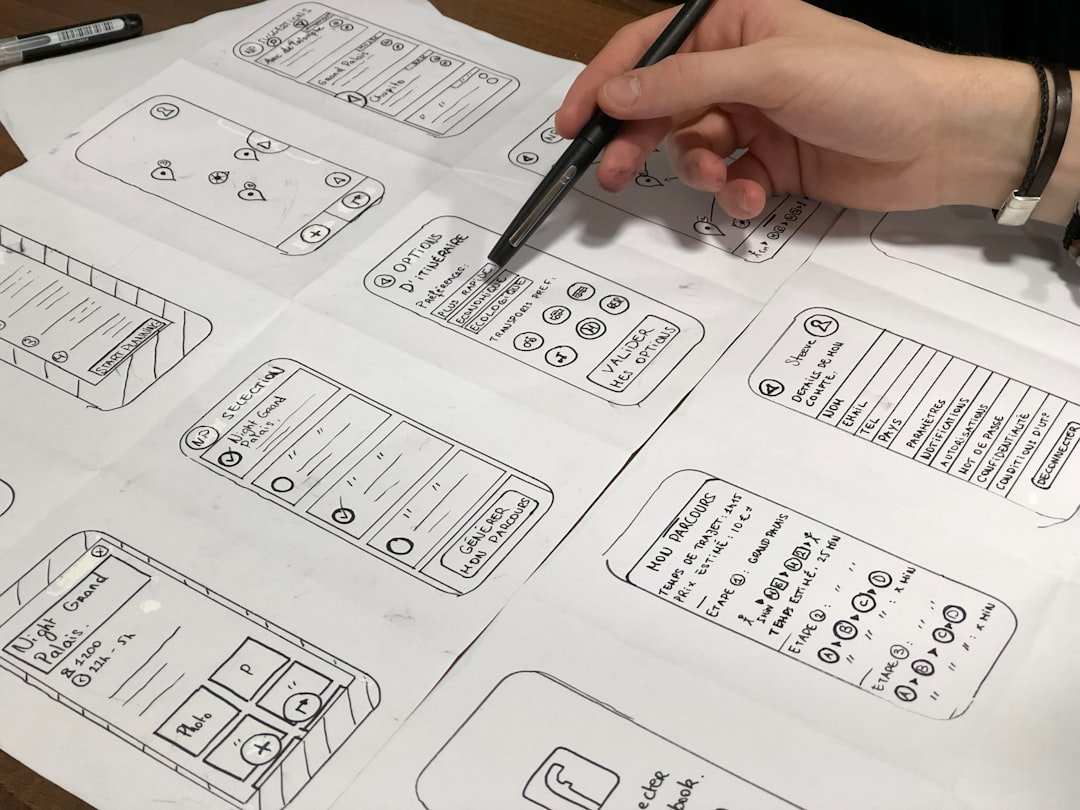
The genesis of any impactful AI application lies in a meticulously defined problem statement. Begin by identifying a specific challenge or opportunity that artificial intelligence is uniquely positioned to address. This involves articulating the core objective, delineating the target users, and outlining the desired outcomes. For instance, is your aim to automate a repetitive task, enhance decision-making with predictive insights, or personalize user experiences? In 2026, the emphasis on value-driven AI means a clear understanding of your application’s purpose and its expected impact is non-negotiable. Sketch out user journeys and define key performance indicators (KPIs) that will measure your application’s success. This initial ideation phase, while seemingly abstract, is foundational for a smooth and efficient development process, minimizing potential rework down the line.
- Curate and Prepare Your Data (The “Fuel” for AI):
Artificial intelligence thrives on data, and the quality and relevance of your datasets are paramount. This step involves identifying, collecting, cleaning, and formatting the data that will train your AI model or feed your pre-trained services. For instance, if you’re building a sentiment analysis app, you’ll need a robust dataset of text with associated sentiment labels. Data acquisition can involve tapping into existing databases, utilizing public datasets, or implementing strategies for real-time data collection. Post-acquisition, data cleansing—addressing missing values, removing outliers, and correcting inconsistencies—is a critical, often time-consuming, yet indispensable process. Effective data preparation ensures your AI model learns from accurate and representative information, directly influencing the efficacy and reliability of your final application. Even with no-code AI app building tools, understanding your data remains crucial.
- Select and Integrate Your AI Model (The “Brain” of Your App):
This is where the magic of easy AI app development truly shines. In 2026, developers rarely start from absolute zero. Your choice typically falls into two categories: leveraging pre-trained AI services or utilizing low-code platforms to configure and fine-tune models with your specific data. For common tasks like image recognition, natural language understanding, or voice synthesis, major cloud providers (e.g., AWS, Google Cloud, Azure) offer highly performant, API-accessible pre-trained models. For more bespoke requirements, low-code AI application development platforms furnish visual interfaces to build, train, and deploy custom models without writing extensive code. These platforms often provide drag-and-drop interfaces for model selection, hyperparameter tuning, and performance evaluation, significantly simplifying the complex machine learning lifecycle. The goal here is to select the most appropriate AI ‘brain’ that aligns with your problem definition and data characteristics.
- Architect Your Application Interface and Logic (The “Body” of Your App):
With your AI model selected and data prepared, the next phase involves constructing the user-facing components and backend logic that will interact with your AI. This is where the principles of a beginner’s guide to AI apps truly coalesce. Utilize no-code or low-code development platforms specifically designed for general application building (e.g., Bubble, Appian, Microsoft Power Apps) to design your user interface (UI) – the buttons, forms, and displays your users will interact with. Concurrently, develop the application’s core logic: how user input is gathered, processed, sent to the AI model (via APIs), and how the AI’s output is received and presented back to the user. Many modern platforms offer seamless integration with AI services, simplifying the orchestration of these complex interactions. The elegance and intuitiveness of your UI/UX will dictate user adoption and satisfaction, making it a pivotal element of your solution to create intelligent applications simply.
- Implement, Test, and Iterate (Refining for Excellence):
Deployment is not the end, but rather the beginning of a continuous improvement cycle. Once your AI-powered app is developed, rigorous testing is indispensable. This includes functional testing to ensure all features work as intended, performance testing under various loads, and crucially, AI model evaluation to verify its accuracy, fairness, and robustness with diverse inputs. Gather feedback from early adopters and conduct A/B testing on different features or AI model versions to optimize user experience and AI performance. Post-deployment, monitoring your application’s performance, identifying potential biases, and observing real-world data drift are critical components of an effective MLOps (Machine Learning Operations) strategy. Continuous iteration, informed by user feedback and performance metrics, is key to refining your AI application and ensuring its long-term relevance and effectiveness in solving real-world problems. This agile approach is fundamental to how to develop AI applications easily and sustainably.
No-code vs. Low-code AI App Building: A Strategic Overview for 2026
Understanding the nuances between no-code and low-code AI app building is crucial for making informed decisions in your development journey. Both paradigms aim to accelerate the creation of intelligent applications simply, but they cater to slightly different user profiles and project complexities. By 2026, these platforms have evolved significantly, offering powerful capabilities that previously required extensive coding. The choice between them hinges on the degree of customization required, the technical proficiency of the development team, and the desired speed of deployment.
| Feature | No-code AI App Building | Low-code AI Application Development |
|---|---|---|
| Coding Requirement | Zero coding; purely visual interface. | Minimal coding, often for custom logic or integrations. |
| Target User | Citizen developers, business analysts, domain experts. | Professional developers, IT teams, citizen developers with some technical aptitude. |
| Customization Level | Limited to platform capabilities and pre-built templates. | High, allows for custom code extensions and bespoke integrations. |
| Complexity Best Suited For | Simple, standardized AI tasks; rapid prototyping. | Complex business logic, integrating legacy systems, unique user experiences. |
| Speed of Development | Extremely fast for suitable projects. | Very fast, but allows for more intricate customization. |
| Flexibility & Scalability | Generally good, but within platform constraints. | Excellent, adaptable to evolving requirements and enterprise-grade needs. |
No-code platforms provide an unparalleled speed for creating basic AI functionalities, ideal for quick proofs-of-concept or applications with well-defined, common use cases. They abstract away all programming, empowering individuals without any technical background to leverage AI. Conversely, low-code platforms offer a compelling middle ground, combining the agility of visual development with the flexibility of custom code. This allows professional developers to accelerate their work significantly while still providing the necessary hooks for bespoke features, complex integrations, or specific algorithmic implementations. The maturation of these platforms, as detailed by industry analyses and resources like Wikipedia’s overview of low-code development, underscores their increasing role in enterprise IT strategies as we move further into 2026.
Who Should Consider This Approach to Simple Steps for AI App Creation?
The methodologies outlined for building AI-powered apps with ease are broadly applicable, transcending traditional technological silos. The democratization of AI tools signifies that a diverse array of professionals and organizations can now harness artificial intelligence to drive innovation, optimize processes, and gain competitive advantages. If you are contemplating how to develop AI applications easily and effectively, consider whether your profile aligns with these key beneficiary groups, recognizing that the current landscape in 2026 strongly favors agility and accessibility.
- Business Leaders and Entrepreneurs:
For those at the helm of strategic direction or spearheading new ventures, the ability to rapidly prototype and deploy AI solutions without a massive upfront investment in a specialized tech team is a game-changer. This approach allows for quicker market validation, faster iteration on product ideas, and the agile integration of intelligent features into existing business processes. Entrepreneurs can test AI-driven solutions to critical problems with minimal technical overhead, accelerating their path from ideation to monetization. Imagine a small business owner creating a personalized customer service chatbot or a dynamic pricing engine without hiring a single backend developer – this is the promise of easy AI app development.
- Domain Experts and Researchers:
Professionals with deep subject matter expertise but limited coding proficiency often possess the clearest insights into problems that AI can solve within their fields. From medical researchers needing to analyze vast genomic datasets to environmental scientists developing predictive models for climate patterns, these individuals are uniquely positioned to define meaningful AI applications. The simplified steps for AI app creation empower them to translate their domain knowledge directly into functional AI tools, bridging the gap between scientific inquiry and technological implementation, much like Dr. Sharma in our opening anecdote. This fosters an environment where specialized knowledge can be leveraged to its fullest potential, accelerating discovery and practical application.
- Citizen Developers and IT Professionals Seeking Efficiency:
The rise of the citizen developer, an individual who builds applications for business use without a formal background in software development, is a defining characteristic of the 2025-2026 tech era. These individuals can leverage no-code AI app building platforms to automate departmental tasks, create internal tools, or enhance existing workflows with intelligent capabilities, effectively reducing bottlenecks and improving operational efficiency. Concurrently, seasoned IT professionals benefit immensely from low-code AI application development platforms. These tools allow them to focus on architecting complex systems and custom integrations, offloading repetitive coding tasks and significantly accelerating project delivery cycles. This strategic shift ensures that technical resources are utilized more effectively, addressing the growing demand for AI solutions across the enterprise.