
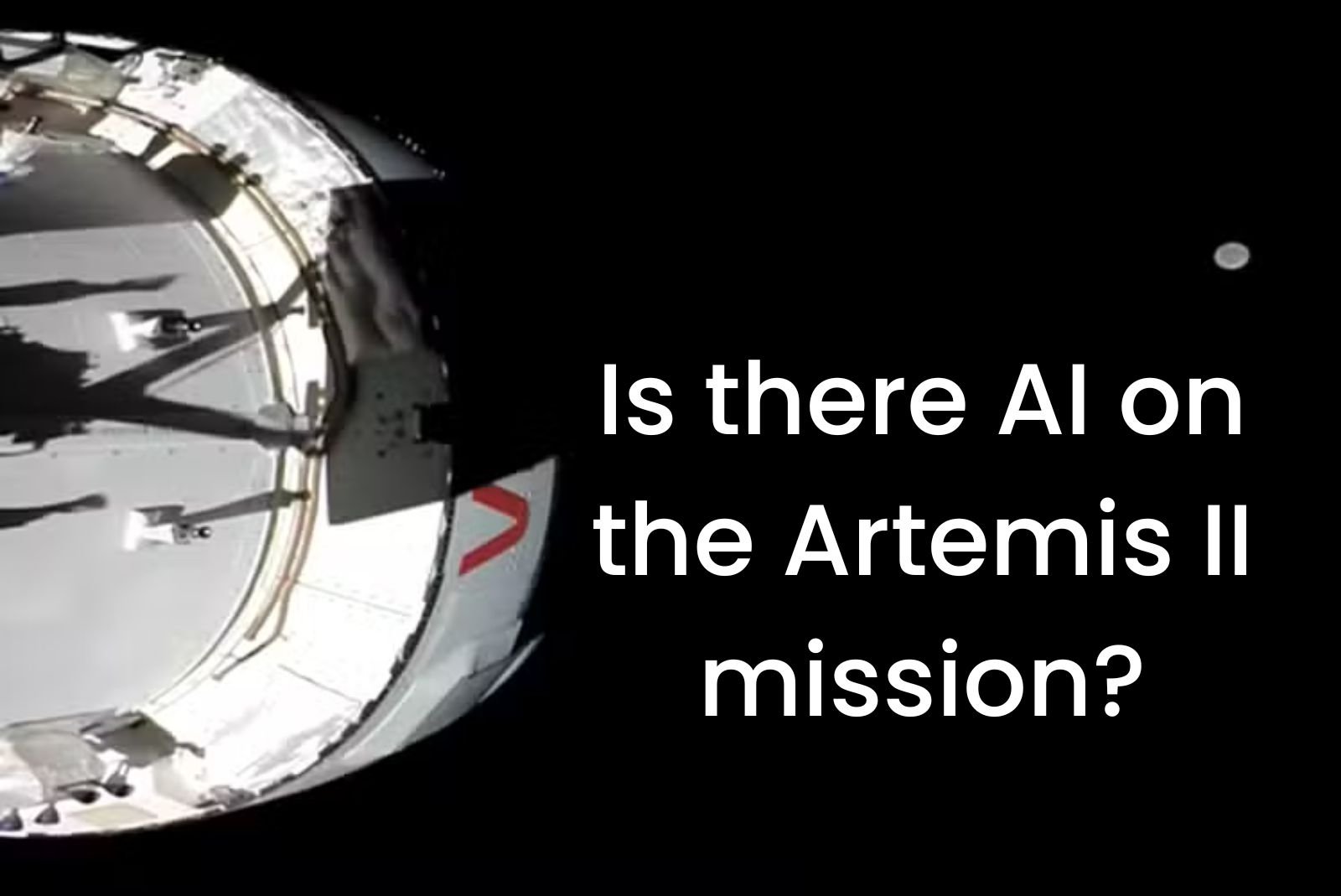
Solar fury is no match! Discover how NASA’s Artemis 2 uses AI to brilliantly shield astronauts from deadly solar radiation. Explore the future of space travel.
“The human journey to deep space is fraught with peril, none more insidious than radiation. Our ability to confront this challenge isn’t just about thicker walls; it’s about smarter protection, leveraging every cognitive advantage we can muster. AI is no longer a luxury, but a fundamental pillar of our multi-planetary future.”
– Leading Aerospace Engineer, discussing advanced space safety protocols
Imagine a journey beyond the protective embrace of Earth’s magnetic field, where an invisible, relentless storm rages. This isn’t science fiction; it’s the daily reality for astronauts venturing towards the Moon and Mars. For NASA’s Artemis 2 mission, this threat is paramount. We’re not just sending humans; we’re sending them with an unprecedented guardian: Artificial Intelligence. This isn’t about passive defense; it’s about a dynamic, proactive shield, powered by the most sophisticated algorithms known to humanity.
The raw power of the Sun, manifested in solar particle events (SPEs) and the constant barrage of galactic cosmic rays (GCRs), poses an existential risk. Traditional shielding is heavy, expensive, and often insufficient for prolonged exposure. But what if your shield could think? What if it could anticipate, adapt, and act with superhuman speed and precision? That’s the electrifying promise AI brings to Artemis 2, transforming our approach to deep-space safety from reactive to truly revolutionary.
The Invisible Adversary: Why Solar Radiation Terrifies Spacefarers
Before we dive into AI’s dazzling solutions, let’s grasp the magnitude of the problem. Beyond Low Earth Orbit, astronauts are exposed to two primary types of radiation, each with its own brand of menace:
- Solar Particle Events (SPEs): These are sudden, intense bursts of high-energy protons and heavy ions ejected from the Sun during solar flares or coronal mass ejections (CMEs). They strike with little warning, capable of causing acute radiation sickness, DNA damage, and long-term health issues, including increased cancer risk and neurological impairment. Think of it as a cosmic sniper shot – powerful and unexpected.
- Galactic Cosmic Rays (GCRs): These originate from outside our solar system, high-energy particles traveling near the speed of light, often remnants of supernovae. GCRs are a constant, low-level drizzle of highly penetrating radiation. While not as acutely dangerous as an SPE, their long-term cumulative effects are profound, posing significant risks to vital organs and cognitive function. This is the slow, persistent erosion of health, a marathon challenge rather than a sprint.
Radiation Reality Check:
Exposure to even moderate levels of space radiation can compromise mission objectives by debilitating crew members or damaging sensitive electronics. Sustained exposure can lead to cataracts, nervous system damage, and a heightened lifetime risk of cancer. Protecting against both SPEs and GCRs requires a multi-faceted, intelligent approach.
Prerequisites for AI’s Radiation Rampart on Artemis 2
Building an AI-driven shield isn’t just about plugging in a supercomputer. It demands a robust foundation of data, advanced sensor networks, and specialized algorithms. Here’s what’s essential:
- Cosmic Sensor Grid: A constellation of space-based observatories (like SOHO, SDO, Parker Solar Probe) and specialized detectors onboard the Orion spacecraft itself, continuously monitoring solar activity, geomagnetic conditions, and real-time radiation flux. This is the AI’s “eyes and ears” on the cosmic weather.
- High-Fidelity Radiation Transport Models: Sophisticated computational models that accurately simulate how different types of radiation interact with spacecraft materials and human tissue. These models train the AI to understand the pathways and impacts of radiation.
- Machine Learning Frameworks: Robust, optimized algorithms (e.g., neural networks, Bayesian inference engines) capable of processing vast datasets, identifying subtle patterns, and making rapid, informed predictions and decisions with minimal latency.
- Integrated Avionics & Life Support Systems: The spacecraft’s core systems must be interconnected with the AI, allowing for autonomous adjustments to orientation, power draw, and internal configurations in response to detected threats. It’s a fully integrated, responsive ecosystem.
AI’s Masterclass in Cosmic Defense: A Step-by-Step Guide to Astronaut Protection
This isn’t just theoretical; it’s a practical blueprint for how AI will actively safeguard the Artemis 2 crew. Each step represents a layer of intelligent defense, working in concert to create an unparalleled sanctuary.
The Cosmic Early Warning System: AI as Solar Prophet
The first, most critical line of defense is foresight. AI excels at predictive analytics, transforming raw solar data into actionable intelligence. Instead of merely reacting to an SPE, Artemis 2’s AI aims to anticipate it.
- Data Ingestion & Pattern Recognition: AI continuously sifts through terabytes of data from solar observatories – magnetic field measurements, plasma velocities, X-ray flux, proton counts. It identifies nascent solar flares or CMEs, looking for subtle pre-cursors that human analysts might miss.
- Probabilistic Threat Assessment: Using deep learning models, the AI calculates the probability of an SPE occurring, its potential intensity, and its likely trajectory and arrival time at the spacecraft’s location. This isn’t a simple “yes/no” but a nuanced risk profile.
- Dynamic Warning & Guidance: If a significant threat is detected, the AI issues an alert with a tailored action plan. This might include recommending a specific spacecraft orientation to present the most shielded side, or directing astronauts to a “storm shelter” within Orion. The lead time could be hours, a monumental advantage.
Tip: The faster and more accurately AI can predict, the more options the crew has for mitigating exposure. Every minute of lead time is invaluable.
Dynamic Fortress Optimization: AI Managing the Shield
Even with predictions, radiation will eventually reach the spacecraft. Here, AI becomes the ultimate tactical commander, optimizing every available resource to maximize physical protection.
- Adaptive Shielding Deployment: While Artemis 2 might not have fully active “force fields,” AI can direct the use of existing materials. This could involve repositioning internal supplies (e.g., water, waste, provisions) to create additional localized shielding around critical crew areas. Imagine your supplies rearranging themselves into a protective cocoon!
- Optimal Spacecraft Orientation: Based on the predicted radiation field, the AI can autonomously command the Orion capsule to reorient itself, presenting its thickest parts (like the heat shield or engine section) towards the incoming flux, minimizing exposure to the crew compartment.
- Differential Power Management: During extreme events, non-essential systems can be powered down or placed in a “radiation-hardened” mode, conserving power and reducing potential damage to sensitive electronics while the crew shelters.
Warning: Manual reorientation takes precious time and crew focus. AI’s instantaneous, precise control is a game-changer.
Precision Crew Guardian: AI Personalizing Astronaut Safety
Protection isn’t just about the vehicle; it’s intensely personal. AI takes crew safety down to the individual level.
- Individual Dosimetry Tracking: Astronauts wear advanced dosimeters that feed data directly to the AI. The system aggregates this with environmental radiation readings and precise location tracking within the capsule, building a real-time, personalized radiation exposure profile for each crew member.
- Activity & Location Guidance: During an elevated radiation threat, the AI can recommend optimal positions within the spacecraft for each astronaut, directing them to areas with the lowest measured dose rates. It might even suggest specific postures or activities that minimize exposure.
- Cumulative Dose Management: Over the course of the mission, the AI maintains a running tally of each astronaut’s cumulative radiation dose, comparing it against established safety thresholds. This allows mission control and the crew to make informed decisions about mission duration, spacewalk planning, and future assignments.
Thought Experiment:
Imagine AI not only telling you where to go but also calculating the exact difference in radiation exposure if you were to, say, reach for a specific tool in a slightly more exposed area, helping you make the safest micro-decisions.
Real-time Health Sentinel: AI Monitoring Astronaut Well-being
Beyond immediate physical protection, AI extends its vigilance to the very biological response of the astronauts to their environment.
- Biometric Data Analysis: Integrating with wearable sensors and onboard medical equipment, AI monitors astronauts’ vital signs, blood panels, and other biometric indicators. It looks for subtle physiological changes that could signal early radiation effects or increased susceptibility.
- Personalized Countermeasure Recommendations: Should radiation exposure be higher than anticipated, or if certain biological markers indicate concern, the AI can recommend specific countermeasures – from adjusting dietary intake of antioxidants to targeted rest protocols or even medical interventions, all based on the individual’s unique physiological profile.
- Long-Term Health Projection: Post-mission, the data collected by AI will be invaluable for projecting long-term health risks and developing more effective preventative and therapeutic strategies for future deep-space explorers.
AI’s Multi-Layered Radiation Defense Strategy
To truly grasp the comprehensive nature of this protection, consider this synergistic approach:
AI’s Radiation Shielding Matrix for Artemis 2
| Defense Layer | AI Capability | Impact on Astronaut Safety |
|---|---|---|
| Prediction | Solar event forecasting, trajectory analysis | Provides crucial lead time for proactive measures, preventing surprise attacks. |
| Containment | Spacecraft reorientation, adaptive shielding, localized material use | Maximizes physical barrier protection, dynamically configuring the ship as a fortress. |
| Personalization | Individual dosimetry, optimal location guidance, activity recommendations | Minimizes individual astronaut exposure based on their unique position and dose. |
| Mitigation | Biometric monitoring, health trend analysis, countermeasure suggestions | Identifies and addresses physiological impacts of radiation, optimizing health outcomes. |
| Learning | Post-event analysis, model refinement, data feedback loops | Continuously improves future protection strategies, making every mission safer. |
Expected Results & The Dazzling Future
The implementation of AI for radiation protection on Artemis 2 isn’t just a technical upgrade; it’s a paradigm shift. We anticipate several transformative outcomes:
- Significantly Reduced Radiation Exposure: By optimizing shielding, predicting events, and guiding crew activities, AI is expected to dramatically lower the cumulative radiation dose received by astronauts, especially during unpredictable SPEs. This directly translates to enhanced long-term health and mission success.
- Extended Mission Durations: With better protection, the constraints on how long humans can safely stay in deep space are loosened. This opens the door for longer lunar stays, more ambitious scientific research, and eventually, human missions to Mars with greater confidence.
- Enhanced Autonomous Operations: The ability of AI to make rapid, data-driven decisions regarding radiation protection reduces reliance on constant ground control intervention, freeing up bandwidth and empowering autonomous capabilities crucial for missions with significant communication delays.
- Pioneering New Technologies: The challenges of Artemis 2 are pushing the boundaries of AI, sensor technology, and material science. The innovations developed here will undoubtedly spill over into other fields, from medical imaging to Earth-based disaster prediction.
Artemis 2 is more than just a return to the Moon; it’s a proving ground for the intelligent systems that will enable humanity’s multi-planetary future. AI isn’t just a tool; it’s an indispensable co-pilot, a cosmic guardian, relentlessly shielding our brave explorers from the Sun’s furious embrace. The “wow factor” isn’t just in reaching new destinations, but in reaching them with unprecedented safety and ingenuity. The age of intelligent space exploration has truly dawned, and it’s exhilarating!