Generative AI: Revolutionizing Creative Workflows – How Generative AI Is Transforming Creative Work
Explore how Generative AI is transforming creative work, revolutionizing workflows in design, writing, and art. See how AI empowers creators with new tools and efficiency.
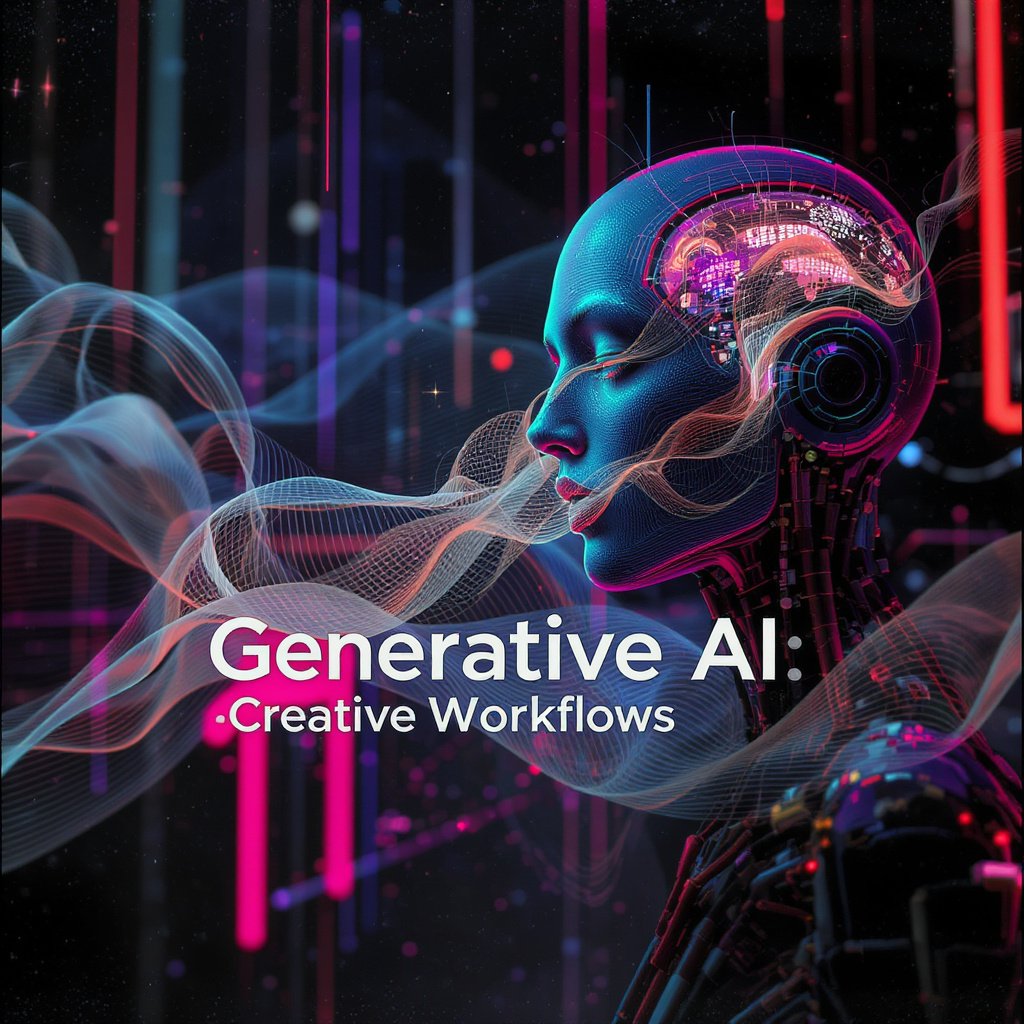
Could the traditional brushstroke of human ingenuity truly be redefined by the algorithms of innovation? This question stands at the forefront of a profound shift impacting industries worldwide. The advent of Generative AI marks a pivotal moment, fundamentally reshaping how we approach creative endeavors. Far from replacing human creativity, this technology is catalyzing an unprecedented Generative AI creative transformation, offering tools that augment human capabilities and streamline processes. This article will delve into a comprehensive comparison between the established paradigms of human-led creative work and the emerging landscape of AI-augmented creative workflows, examining How Generative AI Is Transforming Creative Work across various domains.
The Enduring Foundations of Human Creative Work
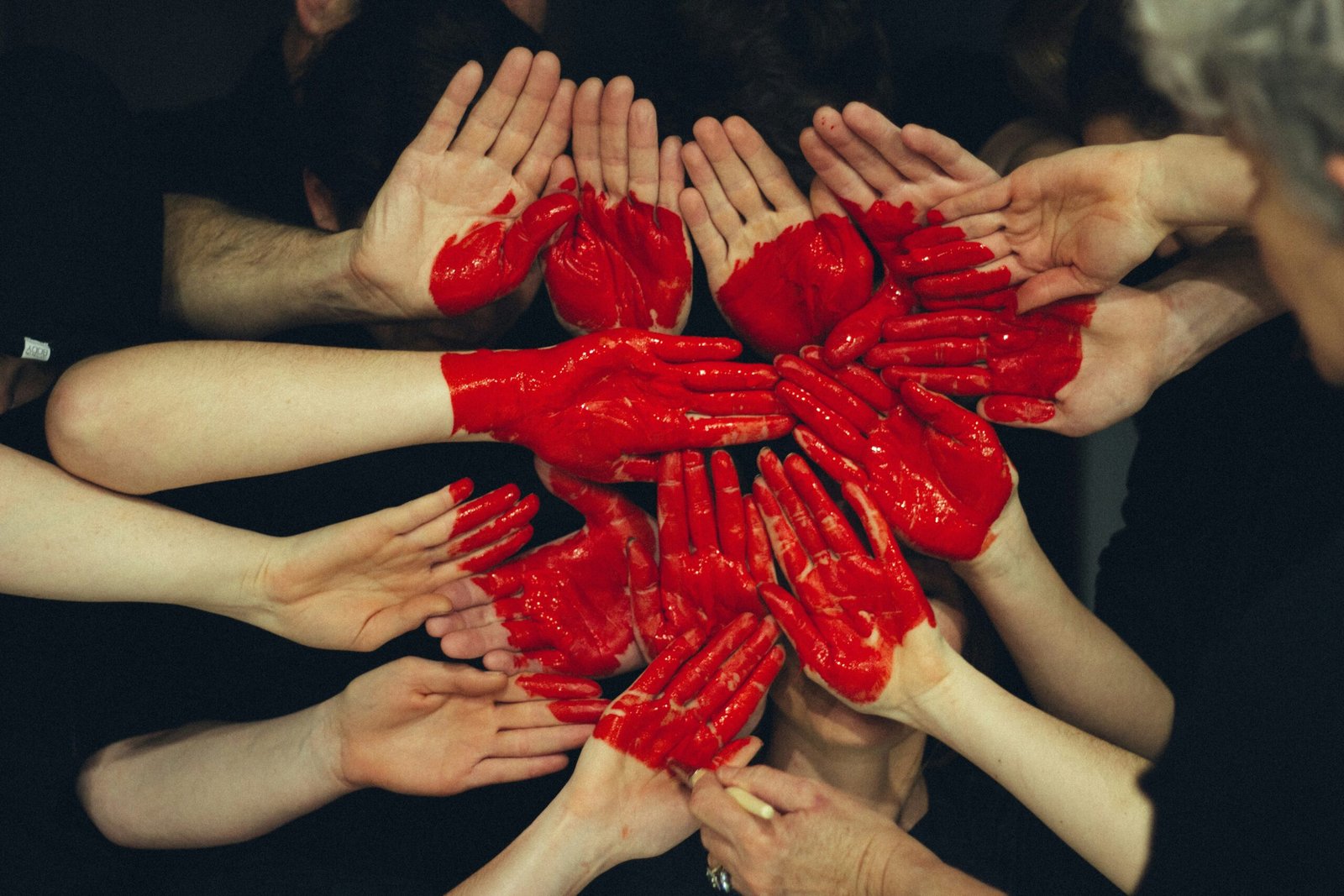
For centuries, the creative process has been synonymous with human intellect, intuition, and emotional depth. From the painter’s canvas to the author’s manuscript, creation has been a deeply personal and often arduous journey. This traditional model relies heavily on individual skill, imagination, and a meticulous, iterative process guided by subjective judgment and cultural understanding.
Human creators bring unique perspectives, life experiences, and an innate capacity for empathy that informs their work. They navigate complex social nuances, derive inspiration from personal observations, and often imbue their creations with layers of meaning that resonate on an emotional level. This approach, while often slower and more labor-intensive, has historically been the sole conduit for true artistic and innovative expression.
- Conceptualization & Ideation: Driven by human experience, emotion, and abstract thought.
- Execution & Craftsmanship: Requires extensive manual skill, training, and mastery of tools.
- Emotional & Cultural Nuance: Deeply embedded understanding of context, audience, and societal values.
- Iterative Refinement: Guided by human judgment, feedback, and artistic vision.
Generative AI’s Ascent in the Creative Domain
Understanding Generative AI and Its Capabilities
Generative AI refers to a class of artificial intelligence models capable of producing novel content, such as text, images, audio, video, or code, that often resembles human-created output. These models are trained on vast datasets of existing creative works, learning patterns, styles, and structures to generate new, original pieces. From designing logos to drafting marketing copy, creative AI tools are democratizing advanced production capabilities.
The core power of Generative AI lies in its ability to synthesize, extrapolate, and create at scale and speed previously unimaginable. It can rapidly produce variations of an idea, generate prototypes, or even complete entire creative tasks, significantly reducing the time and resources traditionally required. This capability is leading to a profound AI impact on creative jobs, evolving roles rather than eliminating them entirely.
Key Aspects of Generative AI for Creativity
Generative AI excels at pattern recognition and content synthesis, allowing creators to explore an expanded possibility space for their projects. It’s a powerful co-pilot, not merely an automation tool, facilitating brainstorming, prototyping, and personalized content generation on an unprecedented scale.
How Generative AI Is Transforming Creative Workflows
The integration of Generative AI into creative workflows introduces new efficiencies and possibilities. For instance, an architect can use AI to generate hundreds of design variations based on specific parameters within minutes, a task that would take human designers days or weeks. Similarly, content marketers can leverage AI to draft multiple blog post outlines or social media captions tailored to different audience segments. This acceleration of initial concept generation and iterative refinement is a cornerstone of the future of creative work AI.
Moreover, Generative AI provides innovative avenues for personalization and customization. Imagine dynamically generated advertising content that adapts in real-time to individual user preferences, or interactive experiences crafted on the fly. This level of dynamic creation was previously impractical, but with AI, it becomes a scalable reality, enhancing engagement and relevance.
Traditional vs. AI-Augmented Creative Work: A Side-by-Side Comparison
To fully grasp the implications of this technological shift, it is crucial to analyze the distinct characteristics and overlapping synergies between purely human-driven creative processes and those enhanced by Generative AI.
| Aspect | Traditional Human Creative Work | AI-Augmented Creative Work |
|---|---|---|
| Ideation & Concept | Human intuition, personal experience, abstract thought. | AI-generated prompts, variations, and novel combinations; human refinement. |
| Execution & Production | Manual skill, craftsmanship, time-intensive labor. | Rapid generation, automated drafts, scalable output; human oversight. |
| Efficiency & Speed | Slower, iterative, dependent on human hours. | Significantly faster, instant prototyping, rapid iteration cycles. |
| Originality & Uniqueness | Innate human creativity, emotional depth, unique perspective. | Novel combinations based on learned data; human guidance for true innovation. |
| Skill Requirement | Mastery of specific crafts, tools, and artistic principles. | Prompt engineering, AI tool proficiency, critical evaluation, human design skills. |
| Cost & Resources | Higher human labor costs, time-consuming. | Subscription costs for tools, lower labor costs per output unit. |
| Emotional Resonance | Deeply ingrained, often primary goal. | Mimics patterns, requires human input/refinement for authentic emotion. |
“The future of creativity is not human versus AI, but human and AI working in symphony, each bringing their unique strengths to the collaborative process.”
Deep Dive: Distinguishing Characteristics
The Nuance of Originality and Authorship
One of the most debated aspects concerns originality. While Generative AI can produce unique outputs, its creations are fundamentally derived from the patterns it learned from existing human works. True originality, often defined by breaking conventional norms, introducing new paradigms, or infusing deeply personal and emotional narratives, remains a distinct strength of human creators. The AI in creative industries often serves as a powerful synthesizer rather than an originator of truly paradigm-shifting ideas without human direction.
Authorship also becomes a complex topic. When an AI generates a piece of art, who is the artist? The person who wrote the prompt? The developer of the AI? This emerging legal and philosophical challenge is reshaping intellectual property discussions and the very definition of a “creator.” As The New York Times has extensively covered, the legal landscape surrounding AI-generated content is rapidly evolving.
The Role of Emotional Depth and Cultural Context
Human creators possess an innate ability to understand and convey complex emotions, cultural references, and subtle social cues that AI currently struggles to replicate authentically. While AI can mimic emotional expression based on learned data, it lacks genuine understanding or personal experience. This makes human input indispensable for projects requiring deep emotional resonance, cultural sensitivity, or nuanced storytelling, areas where Generative AI for artists and designers serves as an aid, not a replacement.
For example, designing a marketing campaign for a niche cultural festival or creating a poignant piece of fine art demands a level of human insight that goes beyond algorithmic pattern matching. AI can generate beautiful imagery, but the underlying narrative and emotional impact often require human curation and direction to truly connect with an audience. This emphasizes that while How Generative AI Is Transforming Creative Work is significant, it’s often about augmentation, not substitution.
Overlapping Synergies: Human and AI Collaboration
The most powerful future for creativity lies not in competition, but in collaboration. Generative AI excels at tasks that are repetitive, require rapid iteration, or demand vast data synthesis. Human creators, conversely, bring vision, strategic thinking, emotional intelligence, and the capacity for truly disruptive innovation. When these strengths combine, the possibilities are immense.
For instance, an artist can use AI to generate preliminary sketches or mood boards, then refine and infuse them with their unique style and emotional depth. A writer might use AI to brainstorm plot points or create character descriptions, then craft the actual narrative. This symbiotic relationship accelerates the creative process, expands creative horizons, and allows humans to focus on higher-order conceptualization and refinement. This collaborative model is rapidly becoming the benchmark for the future of creative work AI.
Which Approach is Right for You? A Use-Case Recommendation
The optimal approach depends heavily on the specific creative task, desired outcome, and available resources. Understanding these distinctions is crucial for leveraging technology effectively.
- Purely Human-Driven Creativity: Ideal for projects demanding profound emotional depth, highly specialized cultural understanding, groundbreaking conceptual originality, or works intended to challenge existing artistic paradigms. Examples include fine art, deeply personal narratives, or highly sensitive advertising campaigns where authenticity is paramount.
- Human-Augmented AI Creativity: This is the sweet spot for many contemporary creative endeavors. It’s suitable for graphic design, content creation, rapid prototyping, game asset generation, architectural visualization, and marketing copy. Here, humans guide the AI, refine its output, and infuse it with their unique vision and strategic intent. It capitalizes on the efficiency of AI while maintaining human quality control and direction. It’s where much of the current Generative AI creative transformation is occurring.
- Predominantly AI-Driven Creativity (with Human Oversight): Best suited for tasks requiring mass personalization, data-driven content generation at scale, or experimental exploration of novel combinations. Examples include generating personalized marketing emails, dynamic website content, or exploring abstract art styles. Human oversight remains vital for quality assurance, ethical considerations, and ensuring alignment with brand voice or project goals. The Gartner Hype Cycle for AI often highlights this stage of widespread adoption and refinement.
Ultimately, the choice is not about replacing human creativity but about strategically integrating creative AI tools to enhance capabilities, overcome limitations, and unlock new creative frontiers. The ability to articulate clear prompts and critically evaluate AI output is becoming an increasingly valuable skill for creatives in this evolving landscape. For professionals in fields like advertising, design, and content production, understanding How Generative AI Is Transforming Creative Work is not merely advantageous but essential for future relevance and competitiveness.
Conclusion
The journey of creative work is at a fascinating crossroads, with Generative AI serving as a powerful new navigator. We have moved from an era where human hands meticulously crafted every detail to one where intelligent algorithms can assist, accelerate, and even inspire. The comparison between traditional human creativity and AI-augmented processes reveals not a rivalry, but a compelling narrative of evolution and synergy. While human intuition, emotional depth, and cultural understanding remain irreplaceable, Generative AI offers unparalleled speed, scalability, and the ability to explore countless variations.
The true revolution lies in the collaboration: empowering human creators with advanced tools that liberate them from repetitive tasks, amplify their creative reach, and open doors to entirely new forms of expression. As Generative AI for artists and designers continues to mature, and as the AI impact on creative jobs reshapes skill requirements, embracing this transformation will define the successful creators and organizations of tomorrow. Engage with these powerful technologies, experiment with creative AI tools, and actively shape the future of creative work AI. The canvas of creativity is expanding; it’s time to pick up both the traditional brush and the digital prompt.