Top 7 UI/UX Trends Transforming Modern App Design
Discover the top 7 UI/UX trends transforming app design. Stay ahead with modern strategies for captivating user experiences and innovative interface development.
Have you ever picked up an app and felt an immediate connection, as if it perfectly understood your needs and anticipated your next move? That seamless, almost magical experience isn’t an accident; it’s the result of brilliant UI/UX design. In the fast-evolving digital landscape, staying current with the latest UI/UX trends transforming app design is not just an advantage, it’s an absolute necessity for creating products that truly resonate with users and stand out in a crowded marketplace. It’s about building a bond, not just an interface.
The Driving Force Behind Modern App Experiences
The essence of great app design lies in its ability to solve problems, evoke emotion, and provide unparalleled ease. Modern users expect more than just functionality; they crave intuitive journeys, aesthetically pleasing visuals, and deeply personalized interactions. The evolution of mobile app UI/UX evolution is relentless, pushing designers to innovate beyond the conventional. We’re seeing a fascinating blend of technology and human psychology shape the next generation of digital tools, making every tap, swipe, and voice command a delightful encounter.
This isn’t merely about superficial changes; it’s a fundamental shift in how we approach interaction and information delivery. These latest app design trends UI/UX are rooted in understanding user behavior at a deeper level, predicting needs, and creating interfaces that feel less like software and more like an extension of the user’s will. It’s about crafting experiences that empower, delight, and genuinely improve daily life.
Top 7 UI/UX Trends Shaping App Design
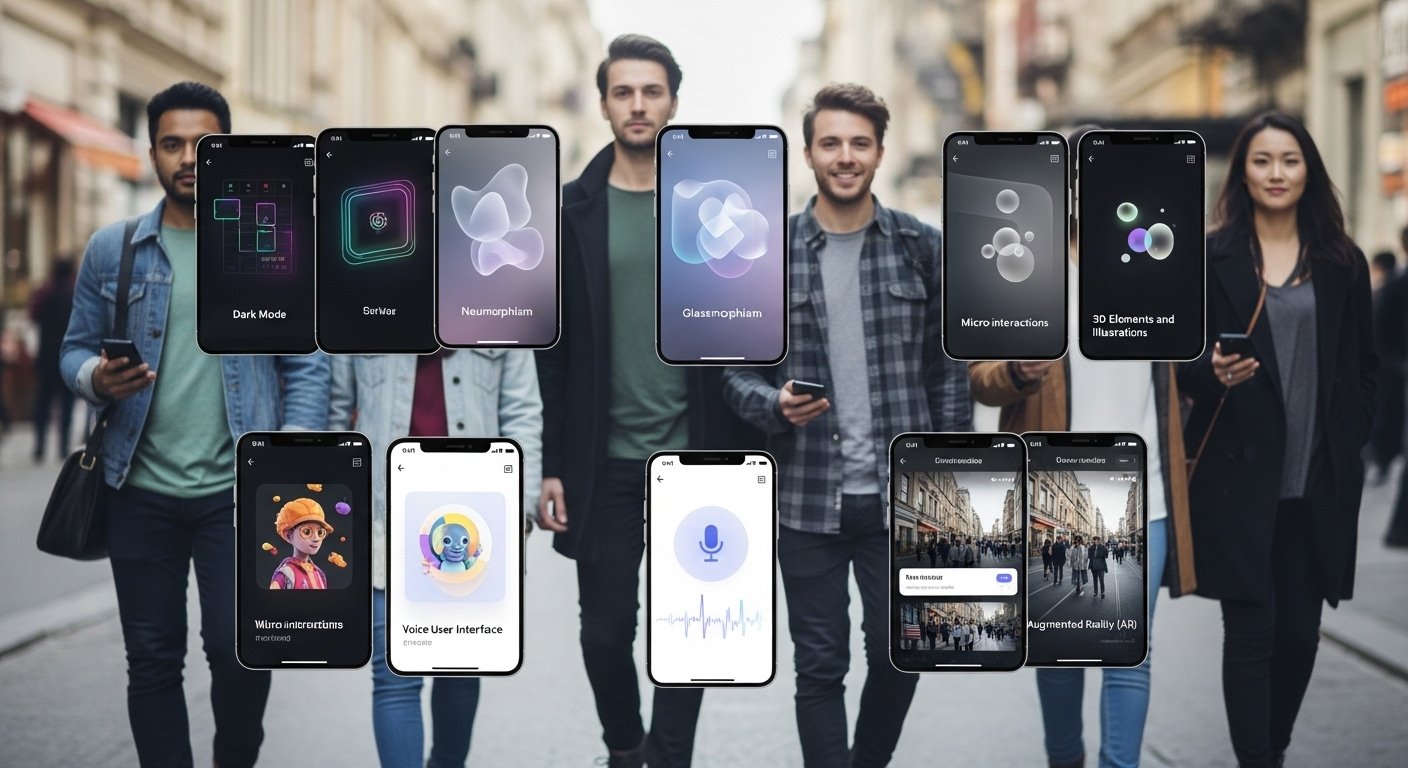
Embark on a journey through the most impactful UI UX design trends mobile apps are embracing, transforming how users interact with their digital worlds. These aren’t just fleeting fads; they represent fundamental shifts in modern app UI/UX principles, promising a more intuitive, engaging, and personal future for all applications.
1. AI-Powered Personalization and Adaptive Interfaces
Imagine an app that doesn’t just learn your preferences but actively adapts its entire interface to your context, mood, and even time of day. This is the promise of AI-powered personalization. Beyond simple recommendations, this trend sees interfaces subtly reconfiguring themselves… perhaps changing color schemes for better focus, reorganizing dashboards to highlight urgent tasks, or simplifying navigation during a commute. It’s about designing a system that feels alive, responsive to your evolving relationship with the application.
Tip for Implementation
Focus on contextual awareness what device are they on, where are they, what time is it? Even minor adjustments based on these factors can significantly enhance relevance and reduce cognitive load. Personalization should always feel helpful, not intrusive.
2. Immersive Micro-interactions and Haptic Feedback
The smallest details often have the biggest impact. Micro-interactions, subtle animations, sounds, and tactile feedback that occur when you perform an action evolve from mere visual embellishments to essential components of intuitive design. Think of the satisfying “thump” when you swipe to refresh the page or the gentle vibration that confirms a successful payment. These subtle responses create a sense of control and enjoyment, making digital actions more tangible and less abstract. They create emotional anchors, transforming routine tasks into rewarding moments.
- Intuitive Confirmation: Haptic feedback provides immediate, non-visual confirmation of an action, crucial for accessibility.
- Emotional Resonance: Thoughtful animations and sounds can convey delight, urgency, or calm, enriching the user’s emotional journey.
- Reduced Cognitive Load: By providing clear feedback, users spend less time wondering if an action was registered, freeing up mental resources.
3. Sustainable and Eco-Conscious Design
As digital consumption grows, so does awareness of its environmental footprint. Future of app UI/UX design increasingly includes sustainability. This trend goes beyond just “dark mode” for power saving. It encompasses minimalist design approaches that reduce data transfer (thus less energy consumption for servers), optimized animations, and even interfaces that subtly encourage responsible digital habits, like suggesting offline modes or summarizing screen time. It’s about crafting experiences that are not only user-friendly but also planet-friendly, aligning with a global shift towards environmental responsibility.
“The most elegant design is one that is both highly effective and ethically responsible, contributing positively to both user well-being and planetary health.”
4. Voice and Conversational UI with Emotional Intelligence
Voice UIs have moved past simple command execution. The next frontier involves conversational interfaces that understand not just what you say, but how you say it. Imagine an app that detects frustration in your tone and proactively offers detailed help, or recognizes excitement and suggests celebratory options. This integration of emotional intelligence allows for more natural, empathetic interactions, making technology feel less robotic and more like a helpful companion. It paves the way for truly hands-free and accessible experiences that adapt to the user’s immediate emotional state, leading to a more profound connection with the application.
5. Modular and Composable Design Systems
Consistency and scalability are paramount, and modular design systems are the backbone of this principle. Instead of isolated screens, designers now build apps from reusable, self-contained components that can be effortlessly assembled and scaled across various devices and platforms. This approach ensures brand consistency and accelerates development, but also allows for greater flexibility. It means an app can look and feel cohesive whether accessed on a smartphone, tablet, smartwatch, or even a smart display, adapting intelligently without breaking the user experience. This focus on composability ensures that applications are future-proof and agile, ready to embrace new form factors as they emerge.
6. Hyper-Simplified Navigation and “Invisible” UI
The goal here is to reduce cognitive load to an absolute minimum. This trend focuses on making the interface imperceptible, allowing users to concentrate exclusively on their tasks. This involves the use of contextual menus, intuitive gestures instead of explicit buttons, and systems that anticipate user intent, presenting options only when and where they are truly needed. Imagine interfaces that learn your most common workflows and optimize them automatically, or intelligent gestures that replace complex processes.
7. Data Storytelling and Actionable Visualizations
Raw data, while powerful, can be overwhelming. This trend is about transforming complex information into compelling narratives and easily digestible, actionable visualizations. Instead of just displaying numbers, apps now tell a story with data, guiding users to insights and encouraging proactive steps. Personalized dashboards might not just show your fitness stats, but suggest “your next best workout” based on recovery and goals. Financial apps might illustrate spending patterns in a way that highlights opportunities for savings, rather than just listing transactions. These emerging UI UX patterns in mobile apps empower users to make informed decisions effortlessly, fostering a deeper engagement with their personal information.
| Traditional Data Display | Data Storytelling Approach | User Outcome |
|---|---|---|
| List of transactions | Interactive spending pie chart with savings suggestions | Financial clarity & motivation to save |
| Raw workout metrics | Progress timeline with personalized goal recommendations | Improved fitness planning & sustained engagement |
| Simple weather forecast | Visualized “optimal outfit” for the day based on activity | Effortless daily planning & preparedness |
Who Should Consider These UI/UX Transformations?
Understanding and implementing these user experience trends app development are crucial for a wide array of stakeholders looking to thrive in the modern digital ecosystem. Whether you’re a seasoned developer, a budding entrepreneur, or a visionary product manager, integrating these principles will set your app apart.
- App Developers and Engineers: By adopting these trends, developers can build more robust, scalable, and future-proof applications. Understanding the design intent behind adaptive interfaces or modular systems empowers them to write more efficient and maintainable code, reducing technical debt and improving performance.
- Product Managers and Entrepreneurs: For those envisioning new products or revamping existing ones, these trends offer a blueprint for competitive advantage. Focusing on personalization, intuitive navigation, and emotional design leads to higher user retention, better conversion rates, and ultimately, a more successful product. It’s about building a loyal user base that genuinely loves interacting with your solution.
- UI/UX Designers: This guide serves as a critical resource for designers to sharpen their skills and evolve their craft. Mastering these emerging patterns allows designers to create more impactful, innovative, and user-centric experiences, staying at the forefront of the industry and shaping the digital future with their creations.